

Think branched-chain amino acids alone are enough for optimal muscle growth? Many athletes believe BCAAs suffice, but science reveals this misconception may be limiting your gains. Essential amino acids include nine distinct compounds your body cannot produce, making dietary intake or supplementation absolutely necessary. Understanding the complete EAA picture transforms how you approach muscle building and recovery.
Table of Contents
- Introduction To Essential Amino Acids (EAAs)
- Biological Role Of EAAs In Muscle Protein Synthesis And Recovery
- Dietary And Supplement Sources Of Essential Amino Acids
- Comparing Essential Amino Acids (EAAs) And Branched-Chain Amino Acids (BCAAs)
- Common Misconceptions About EAAs
- Practical Guide To Using EAAs For Athletic Performance
- Explore Our EAA Supplements For Your Fitness Goals
- Frequently Asked Questions
Key takeaways
| Point | Details |
|---|---|
| Nine essential amino acids drive muscle growth | Your body cannot synthesise histidine, isoleucine, leucine, lysine, methionine, phenylalanine, threonine, tryptophan, and valine. |
| Leucine activates muscle protein synthesis | This EAA triggers the mTOR pathway critical for muscle repair and growth after training. |
| Animal proteins provide superior bioavailability | Animal sources deliver 90-100% EAA absorption compared to 50-70% from plant proteins. |
| EAAs outperform BCAAs for muscle building | Full-spectrum EAA supplementation produces up to 30% more protein synthesis than BCAA-only products. |
| Strategic timing enhances performance gains | Taking EAAs before, during, or after workouts maximises muscle recovery and growth. |
Introduction to essential amino acids (EAAs)
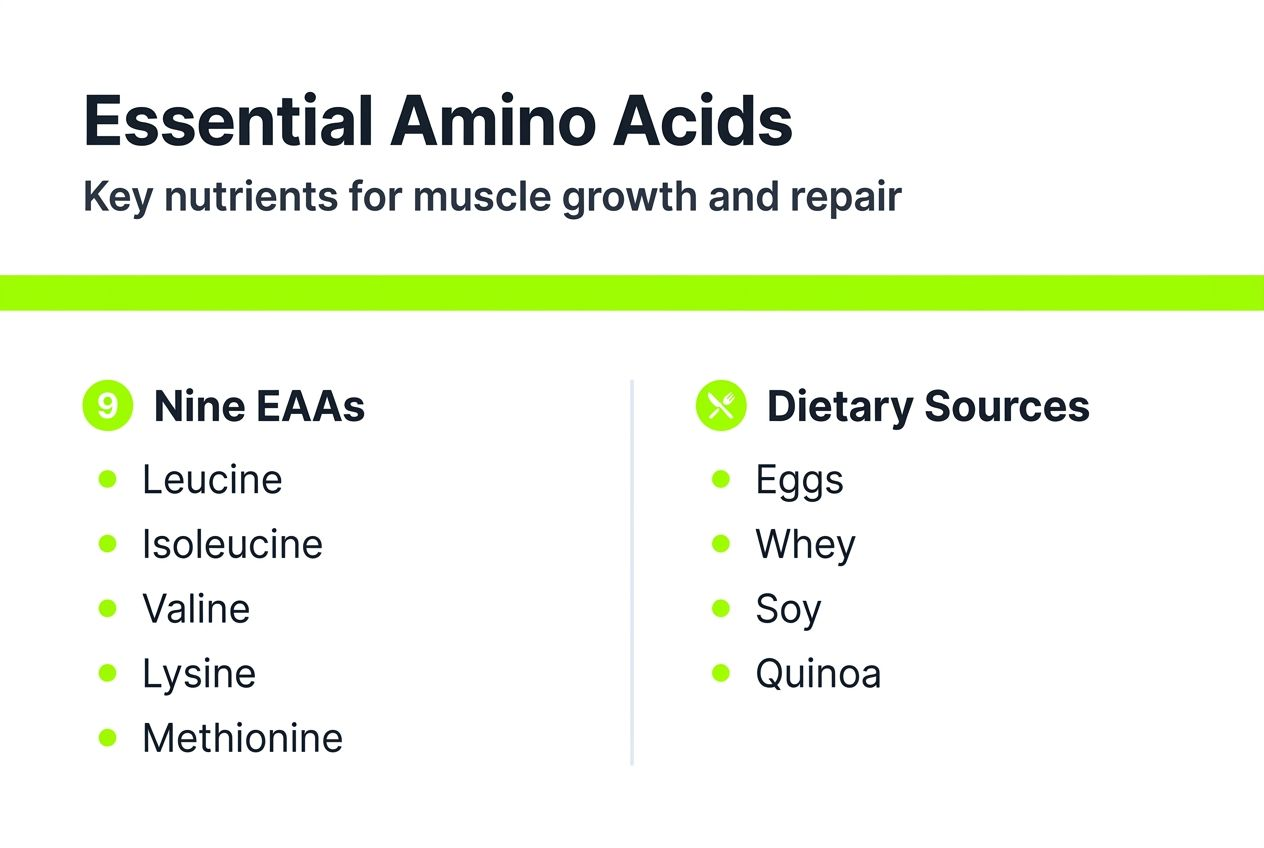
Essential amino acids are protein building blocks your body cannot manufacture internally. Unlike non-essential amino acids that your system synthesises from other nutrients, EAAs must come from external sources. There are nine essential amino acids humans cannot produce: histidine, isoleucine, leucine, lysine, methionine, phenylalanine, threonine, tryptophan, and valine.
Without adequate EAA intake, your body cannot complete muscle protein synthesis effectively. This limitation directly impacts recovery, performance, and muscle growth potential. The nine EAAs serve distinct roles:
- Leucine triggers muscle building signalling pathways
- Lysine supports calcium absorption and collagen formation
- Methionine aids tissue repair and metabolic function
- Threonine contributes to immune system strength
- Tryptophan regulates mood and sleep through serotonin production
The fundamental difference between essential and non-essential amino acids centres on biosynthesis capability. Your liver can produce non-essential amino acids like alanine and glutamine when needed. However, the nine EAAs require direct dietary consumption or supplementation. Missing even one essential amino acid creates a bottleneck in protein synthesis, limiting muscle repair regardless of other nutrients present.
Pro Tip: Track your daily protein sources to ensure you consume all nine EAAs regularly, especially if following plant-based nutrition plans that may lack certain amino acids in individual foods.
Biological role of EAAs in muscle protein synthesis and recovery
Leucine activates muscle protein synthesis through the mTOR signalling pathway, acting as the primary trigger for muscle growth. This pathway responds directly to leucine concentration in your bloodstream, initiating the cellular machinery that builds new muscle tissue. Without sufficient leucine alongside the other eight EAAs, this anabolic signal remains weak or inactive.

Muscle protein synthesis requires all nine EAAs working together. Your body assembles proteins like constructing a building. Missing even one amino acid stops the entire process, similar to lacking a critical component in construction. This explains why incomplete protein sources produce inferior muscle building results compared to complete proteins containing all EAAs in adequate ratios.
Maintaining nitrogen balance depends on balanced EAA intake, particularly during physical stress. Nitrogen balance measures protein breakdown versus synthesis. Positive nitrogen balance indicates muscle growth, whilst negative balance signals muscle loss. Key mechanisms include:
- EAAs provide nitrogen for new protein assembly
- Leucine prevents excessive protein breakdown during training
- Isoleucine and valine support energy production during exercise
- Threonine and methionine aid tissue repair processes
Intense training creates micro-tears in muscle fibres requiring immediate amino acid availability for repair. The window immediately following exercise represents peak sensitivity to EAAs. During this period, your muscles actively import amino acids to rebuild stronger tissue. Athletes frequently miss this opportunity by delaying protein intake or consuming incomplete amino acid profiles.
Recovery from injury demands even higher EAA requirements than normal training. Damaged tissue consumes amino acids rapidly for reconstruction. EAAs support muscle maintenance during immobilisation or reduced activity, preventing excessive muscle wasting. Understanding amino acids for muscle growth transforms your approach to nutrition timing and composition.
Pro Tip: Consume EAAs within 30 minutes post-workout when muscle protein synthesis rates peak, maximising your training adaptations and recovery speed.
Dietary and supplement sources of essential amino acids
Animal proteins provide superior EAA bioavailability ranging from 90-100% absorption, whilst plant proteins typically deliver 50-70%. This difference significantly impacts how much usable protein reaches your muscles. A 30-gram serving of whey protein provides more bioavailable EAAs than 30 grams of pea protein despite identical protein content on labels.
Whey protein contains approximately 25-30% EAAs by weight, making it exceptionally rich in these critical amino acids. This concentration explains why whey remains the gold standard for athletes seeking muscle growth. Other high-quality sources include:
- Eggs deliver complete EAA profiles with excellent bioavailability
- Beef provides all nine EAAs plus additional nutrients like iron
- Fish offers EAAs alongside omega-3 fatty acids for recovery
- Dairy products supply casein for sustained amino acid release
Plant-based athletes face additional challenges obtaining adequate EAAs. Quinoa and soy contain all nine EAAs but in lower concentrations and bioavailability than animal sources. Combining complementary plant proteins throughout the day helps achieve complete amino acid profiles. Rice paired with beans creates a complete protein when consumed together.
| Source | EAA Content | Bioavailability | Best For |
|---|---|---|---|
| Whey protein | 25-30% by weight | 90-100% | Post-workout recovery |
| Whole eggs | 18-20% by weight | 95-100% | Any meal timing |
| Chicken breast | 15-18% by weight | 90-95% | Lean muscle building |
| Quinoa | 12-14% by weight | 65-75% | Plant-based diets |
| Soy protein | 18-22% by weight | 70-80% | Vegan supplementation |
EAA supplements offer concentrated doses without additional calories or macronutrients. These products suit athletes with restricted diets, those struggling to consume adequate protein, or individuals seeking precise amino acid timing around training. Supplement quality varies significantly based on amino acid ratios and manufacturing standards.
Pro Tip: Choose EAA supplements listing individual amino acid amounts rather than proprietary blends, ensuring you receive adequate leucine for triggering muscle protein synthesis.
Comparing essential amino acids (EAAs) and branched-chain amino acids (BCAAs)
Branched-chain amino acids include just three of the nine EAAs: leucine, isoleucine, and valine. BCAA-only supplementation is insufficient because muscle protein synthesis requires all nine essential amino acids present simultaneously. Taking BCAAs alone creates an imbalanced amino acid pool, potentially limiting protein assembly despite adequate leucine signalling.
The branched-chain amino acids earned their name from molecular structure featuring branched side chains. This structure allows rapid absorption and direct muscle metabolism without liver processing. However, this advantage disappears when other EAAs remain absent. Your body cannot complete protein synthesis without the six missing essential amino acids.
Research demonstrates BCAA-only products produce up to 30% less muscle protein synthesis compared to complete EAA formulations. This significant difference stems from incomplete amino acid availability. Think of protein synthesis like assembling a puzzle. BCAAs provide only three pieces of a nine-piece set. The picture remains incomplete regardless of how many times you place those same three pieces.
| Feature | EAAs | BCAAs |
|---|---|---|
| Amino acids included | All nine essential | Only leucine, isoleucine, valine |
| Muscle protein synthesis | Complete activation | Partial activation (30% less) |
| Cost per serving | Higher | Lower |
| Effectiveness | Superior for muscle building | Limited without other EAAs |
| Best use case | Complete muscle support | Budget-conscious supplementation |
BCAA supplements cost less than full EAA products, explaining their continued popularity. However, this economy proves false when measuring results per pound spent. Investing in complete EAA supplementation delivers better muscle growth outcomes, making the higher price justified by superior effectiveness.
Some athletes consume adequate dietary protein providing all EAAs, then add BCAA supplements unnecessarily. This approach wastes money without providing additional benefits. Assess your total daily amino acid intake before selecting supplements. Complete protein sources already contain BCAAs alongside other EAAs, making isolated BCAA supplementation redundant for most athletes eating sufficient protein.
Common misconceptions about EAAs
Many fitness enthusiasts believe BCAAs alone suffice for muscle building, but this misconception limits their gains significantly. The three branched-chain amino acids cannot complete protein synthesis without the six other essential amino acids present. Marketing historically emphasised BCAAs due to lower manufacturing costs and established brand recognition, not superior effectiveness.
Another frequent misunderstanding involves dosing. Athletes sometimes assume consuming massive EAA quantities produces proportionally greater muscle growth. Research shows diminishing returns beyond adequate intake levels. Your body can only process limited amino acids per hour. Excess consumption provides no additional benefit and may cause digestive discomfort.
The distinction between essential and non-essential amino acids confuses many athletes. Some believe non-essential amino acids offer equal muscle-building benefits. Whilst non-essential amino acids play important roles, they cannot substitute for EAAs in triggering protein synthesis. Your body synthesises non-essential amino acids from other nutrients, making dietary intake less critical.
Key myths to dismiss:
- Taking EAAs eliminates the need for whole food protein sources
- Plant proteins provide identical EAA benefits to animal proteins
- Timing EAA intake makes no difference to results
- More expensive EAA supplements always outperform budget options
- EAA supplementation works equally well regardless of dietary protein intake
Some athletes following high-protein diets consume EAA supplements unnecessarily. When dietary protein exceeds 1.6 grams per kilogram body weight daily, additional EAA supplementation provides minimal extra benefit for most individuals. Strategic supplementation targets specific scenarios like training fasted or immediately post-workout when rapid amino acid delivery matters most.
Pro Tip: Calculate your daily protein intake from whole foods before investing in EAA supplements, as adequate dietary protein often provides sufficient EAAs without additional supplementation costs.
Practical guide to using EAAs for athletic performance
EAA supplementation benefits athletes most when dietary protein falls below 1.2 grams per kilogram body weight daily. If you already consume adequate high-quality protein, supplementation provides marginal additional benefits except during specific training scenarios. However, strategic EAA timing around workouts enhances recovery regardless of total daily protein intake.
Optimal timing places EAA consumption before, during, or immediately after training sessions. Pre-workout EAAs prime your muscles with amino acids ready for protein synthesis as exercise creates demand. Intra-workout dosing maintains amino acid availability during extended training sessions. Post-workout timing capitalises on heightened muscle sensitivity to nutrients.
Follow this step-by-step approach:
- Calculate your daily protein needs: multiply body weight in kilograms by 1.6 to 2.2
- Assess current dietary protein intake from whole foods over three typical days
- Identify gaps where protein intake falls short of targets
- Choose EAA supplementation if dietary protein consistently remains below 1.2 grams per kilogram
- Start with 10 to 15 grams of EAAs around training sessions
- Monitor recovery, performance, and muscle growth over four weeks
- Adjust timing and dosage based on training intensity and dietary changes
Athletes with restricted diets benefit most from EAA supplements. Vegetarians, vegans, and those with food allergies often struggle obtaining complete amino acid profiles from meals alone. Supplementation fills these nutritional gaps efficiently. Similarly, athletes cutting body weight whilst maintaining muscle mass require strategic amino acid intake without excess calories.
Those consuming high-quality proteins like whey, eggs, and meat regularly may find limited benefit from additional EAAs. However, even well-fed athletes can strategically use EAA supplements during intense training blocks, competition preparation, or when training frequency increases significantly. Understanding how to use amino acids effectively requires personalising approach to your specific circumstances.
Pro Tip: Mix EAA powder with intra-workout carbohydrates during sessions exceeding 90 minutes to maintain both energy and amino acid availability simultaneously, enhancing endurance and recovery.
Explore our EAA supplements for your fitness goals
Understanding essential amino acids transforms your approach to muscle building and recovery. Now apply this knowledge with high-quality supplementation designed for serious athletes. MyGymSupplements offers carefully formulated EAA products providing balanced amino acid profiles that support your training demands. Whether you seek to break through plateaus, enhance recovery, or optimise muscle growth, targeted EAA supplementation delivers measurable results. Explore our range of amino acid supplements formulated specifically for fitness enthusiasts pursuing peak performance. Your muscles deserve complete nutritional support.
Frequently asked questions
What is the best time to take essential amino acids?
Optimal timing places EAA intake before, during, or immediately after workouts when muscle protein synthesis rates peak. Pre-workout dosing ensures amino acids are available as exercise creates demand. Post-workout timing capitalises on heightened muscle sensitivity lasting up to two hours after training. Spacing intake across intense training days enhances overall effectiveness. Learn more about EAA supplement timing for your specific training schedule.
How do essential amino acids differ from branched-chain amino acids?
Branched-chain amino acids include only three of the nine essential amino acids: leucine, isoleucine, and valine. EAAs provide the complete set of nine amino acids necessary for full muscle protein synthesis. BCAA-only supplementation produces up to 30% less protein synthesis than complete EAA formulations because the six missing amino acids create a bottleneck. Understanding this distinction helps you choose more effective supplements. Read our complete BCAA guide for detailed comparisons.
Can I get enough essential amino acids from diet alone?
Many athletes consuming adequate high-quality protein meet EAA requirements through diet alone. Animal proteins like whey, eggs, and meat provide complete amino acid profiles with excellent bioavailability. However, supplementation helps those with dietary restrictions, inadequate protein intake, or significantly increased demands from heavy training. Calculate your daily protein consumption to determine whether dietary essential amino acids meet your needs or supplementation would optimise results.
Recommended
- 9 Essential Amino Acids List for Muscle Growth Explained – MyGymSupplements
- 9 Essential Amino Acids List for Muscle Growth Explained – MyGymSupplements
- 7 Essential Ways Amino Acids Boost Muscle Growth – MyGymSupplements
- 7 Essential Ways Amino Acids Boost Muscle Growth – MyGymSupplements
- Best Supplement Reviews & Rankings 2026 | RankOfSupplements

0 comments