

Chasing bigger lifts or quicker recovery often comes down to more than just training harder. For bodybuilders and dedicated vegans alike, metabolism is the unseen engine driving muscle growth, fat loss, and how well your supplements truly work. Gaining a clear grasp of how your body actually converts food into fuel and repairs muscle gives you the power to tailor every aspect of your nutrition for real progress. This guide reveals the core science that lets you train and eat smarter, not just harder.
Table of Contents
- What Does Metabolism Really Mean?
- Types of Metabolism in Fitness Nutrition
- Key Processes Driving Muscle Building
- Factors That Influence Metabolic Rate
- Mistakes That Sabotage Your Metabolism
Key Takeaways
| Point | Details |
|---|---|
| Understanding Metabolism | Metabolism encompasses the chemical reactions converting food into energy, crucial for optimising training and supplementation. |
| Metabolic Pathways in Exercise | Aerobic and anaerobic metabolism serve different purposes, influencing energy use during various exercise intensities. |
| Key Processes for Muscle Growth | Mechanical tension, metabolic stress, and muscle damage collaboratively drive muscle growth; understanding their interactions is vital. |
| Avoiding Common Mistakes | Eating too little, insufficient protein intake, and chronic stress can negatively impact metabolism and hinder progress, making lifestyle consistency crucial. |
What Does Metabolism Really Mean?
Metabolism is the continuous hum of chemical reactions happening inside your body right now. It’s what keeps your heart beating, your muscles contracting, and your brain thinking. More specifically, metabolism refers to the sum of chemical reactions occurring within living cells that convert the food you eat into useable energy and the building blocks your body needs to function. For anyone serious about muscle growth, understanding this process is non-negotiable. You cannot optimise your training or supplementation strategy without grasping how your body actually uses energy.
Break down metabolism into its component parts and you’ll find three essential functions at work. First, your body converts food into energy that fuels everything from basic survival to intense gym sessions. Second, it builds essential compounds like proteins, which are absolutely critical for muscle repair and growth. Third, it eliminates waste products that would otherwise accumulate and damage your cells. Your metabolic rate is simply the amount of energy your body uses in a given timeframe, typically expressed as calories burned per day. This rate varies significantly between individuals based on several factors: your age, biological sex, genetics, body composition, and any existing health conditions. A 25-year-old vegan bodybuilder with 18% body fat will have a completely different metabolic rate than a 45-year-old with 32% body fat, even if they weigh the same.
Metabolism operates through several distinct processes working simultaneously. Your basal metabolic rate (BMR) is the energy your body burns just to stay alive at rest, maintaining core functions like breathing, circulation, and cell repair. Then there’s thermogenesis, which is the energy you burn during digestion and as heat production. Finally, there’s the energy you expend through exercise and daily movement. For bodybuilders chasing muscle growth, this becomes crucial. The more lean muscle mass you carry, the higher your resting metabolic rate climbs. Muscle tissue is metabolically active, meaning it burns calories even when you’re sitting down. This is why consistent resistance training combined with adequate protein intake (whether from whey isolate, plant-based blends, or whole foods) creates a compounding advantage. You’re not just building muscle; you’re fundamentally rewiring how efficiently your body burns energy. These metabolic processes aren’t random or fixed. They’re regulated by enzymes, hormones, and cellular signalling mechanisms that respond directly to the stress you place on your body through training and the nutrients you provide through smart supplementation.
Pro tip: Track your actual energy expenditure using your maintenance calories as a baseline, then adjust your intake based on real results over 2-3 weeks rather than relying on generic calculators, since individual metabolic variations can swing your requirements by 300-500 calories daily.
Types of Metabolism in Fitness Nutrition
When you step into the gym or lace up your trainers for a run, your body doesn’t switch to a single energy system. Instead, multiple metabolic pathways activate simultaneously, each contributing differently depending on exercise intensity, duration, and your training status. Understanding these distinct types of metabolism is crucial because your nutritional strategy must align with which energy systems you’re actually using. If you’re fuelling your body incorrectly for the type of work you’re doing, you’re leaving muscle gains on the table.
Your body operates through two primary metabolic pathways during exercise: aerobic metabolism and anaerobic metabolism. Aerobic metabolism occurs when oxygen is readily available and your body burns carbohydrates, fats, and even small amounts of protein to produce energy for sustained activities like steady-state cardio or endurance work. This pathway is efficient and can sustain effort for extended periods, making it ideal for recovery days and lower-intensity training. Anaerobic metabolism, by contrast, kicks in during high-intensity efforts when your muscles demand energy faster than your cardiovascular system can deliver oxygen. During heavy compound lifts or sprint intervals, your muscles rely on stored phosphocreatine and glucose broken down without oxygen, producing lactate as a byproduct. This pathway powers short bursts of maximal effort, typically lasting 10 to 90 seconds. For bodybuilders and strength athletes, anaerobic capacity directly influences how much weight you can move and for how many reps, making it the dominant concern during resistance training sessions.
Let’s compare aerobic and anaerobic metabolism to understand their roles during training:
| Aspect | Aerobic Metabolism | Anaerobic Metabolism |
|---|---|---|
| Oxygen Requirement | Requires oxygen | Functions without oxygen |
| Main Fuel Sources | Carbohydrates, fats, some protein | Glucose, phosphocreatine |
| Best Suited For | Endurance, recovery, low-intensity | Short, intense bursts |
| Byproducts Produced | Carbon dioxide, water | Lactate, hydrogen ions |
Within these broader categories lies the interplay between carbohydrate, fat, and protein metabolism. The biochemical pathways involved in energy production shift based on what’s available and what intensity you’re working at. During intense strength training, your muscles prioritise carbohydrates because they’re the fastest fuel source. This is why pre-workout carbohydrates matter so much for performance. During lower-intensity activity or rest days, your body preferentially burns fat for fuel, sparing muscle tissue. Protein metabolism becomes relevant when carbohydrate availability runs low or when you’re in a caloric deficit, which is why adequate protein intake from sources like whey isolate, plant-based powders, or whole foods prevents muscle breakdown during cutting phases. The flexibility to switch between these fuel sources is called metabolic flexibility, and it’s something you can train and improve through strategic nutrition timing and varied training intensities.
Carbohydrate timing deserves special attention because dietary carbohydrate intake directly influences metabolic responses during exercise. Consuming fast-digesting carbohydrates before or during intense training elevates blood glucose rapidly, providing readily available fuel for high-intensity efforts. This is why many athletes use simple carbohydrates in pre-workouts or around training windows. Post-workout, those same fast carbohydrates become valuable for replenishing depleted muscle glycogen stores. However, your body’s ability to process different carbohydrate types varies, and optimising this timing depends on your individual metabolic flexibility, training intensity, and body composition goals. Vegans and plant-based athletes often find that pairing carbohydrate-rich foods with complementary proteins or amino acid supplements helps maintain stable energy levels whilst supporting muscle protein synthesis.
Pro tip: Match your carbohydrate intake to your training intensity: consume more simple carbohydrates during or immediately after high-intensity sessions, and rely on fats and proteins on lower-intensity days to improve metabolic flexibility and fat-burning capacity.
Key Processes Driving Muscle Building
Muscle growth isn’t magic, and it isn’t random. Three distinct biological processes work together to build muscle tissue, and understanding each one transforms how you approach training and nutrition. These processes are mechanical tension, metabolic stress, and muscle damage. Every rep you perform, every set you complete, and every calorie you consume either supports or undermines these three drivers. Get them right, and your metabolism works with you to build muscle. Get them wrong, and you’ll spin your wheels in the gym for months without meaningful progress.
Mechanical tension is the primary driver of muscle growth. When you load your muscles with heavy weight, you create tension that stretches and contracts muscle fibres, signalling your body that something important is happening. This signal triggers muscle protein synthesis, the process where your body builds new muscle protein to adapt to the stress. This is why progressive overload matters so much. You need to consistently challenge your muscles with increasing weight or volume to maintain the signal for growth. Light weights with high reps can contribute to growth, but nothing replaces the growth stimulus of heavy, controlled resistance. For vegan bodybuilders specifically, maintaining adequate total protein intake from plant-based sources like pea, hemp, or blended plant proteins becomes even more critical because the amino acid profile of plant proteins differs from animal sources, requiring either higher volumes or strategic supplementation.

Metabolic stress occurs when your muscles demand energy faster than your body can supply it optimally, leading to the accumulation of metabolites like lactate, hydrogen ions, and phosphate. This metabolic environment stimulates anabolic pathways and signals muscle growth. This is why moderate weights with higher repetition ranges (8-15 reps) and shorter rest periods create such a powerful growth stimulus. You’ll feel the “pump” during these sets, and that sensation reflects the metabolic stress accumulating. When combined with adequate recovery nutrition and sleep, this stress adaptation drives significant hypertrophy. The third critical process, muscle damage, involves micro-tears in muscle fibres that trigger your body’s repair mechanisms. More importantly, muscle stem cells activate and proliferate in response to this damage, supporting both repair and new muscle tissue growth. This is why soreness (though not required for growth) indicates that your training created sufficient stimulus.
These three processes don’t work in isolation. Your metabolism integrates all three signals simultaneously, determining how much muscle you actually build. This is where nutrition becomes inseparable from training. Without adequate protein, your body cannot construct new muscle tissue no matter how perfect your training stimulus. Without sufficient total calories, your body prioritises survival over growth. Without proper recovery nutrition post-workout, you dampen the metabolic stress and repair signals you worked hard to create. For bodybuilders chasing muscle hypertrophy, timing matters too. Consuming carbohydrates and protein within a few hours of training replenishes glycogen and provides amino acids when your muscles are most receptive to building new tissue. This is why pre-workout and intra-workout nutrition strategies exist. Your metabolism works on a 24-hour cycle though, so single meals matter less than your weekly average intake. Focus on consistency over perfection.
Pro tip: Vary your rep ranges across the week to stimulate all three growth processes, using heavy sets (3-6 reps) for mechanical tension on compound lifts, moderate sets (6-12 reps) for combined tension and stress, and higher-rep work (12-20 reps) for metabolic stress and muscular endurance.
Factors That Influence Metabolic Rate
Your metabolic rate isn’t fixed. It’s not something you inherit and accept for life. Instead, it’s a dynamic number constantly shaped by multiple factors both within and outside your control. Some of these factors you can manipulate directly through training and nutrition; others require understanding and adaptation. The key is recognising which levers you can actually pull to shift your metabolism in your favour. Body composition stands as the most controllable factor influencing your metabolic rate. Lean muscle tissue is metabolically expensive. It demands calories constantly, even at rest, because maintaining muscle requires active protein turnover and cellular energy expenditure. A person with 25 kilograms of muscle mass burns significantly more calories daily than someone with 15 kilograms of muscle, regardless of total bodyweight. This is why building muscle through resistance training creates a compound advantage for long-term fat loss. Every kilogramme of muscle you add raises your baseline metabolic expenditure, making future caloric deficits more sustainable. For vegan athletes, this principle remains identical. Plant-based protein sources like hemp, pea, or blended formulations build muscle just as effectively as animal sources when total protein intake meets your needs.
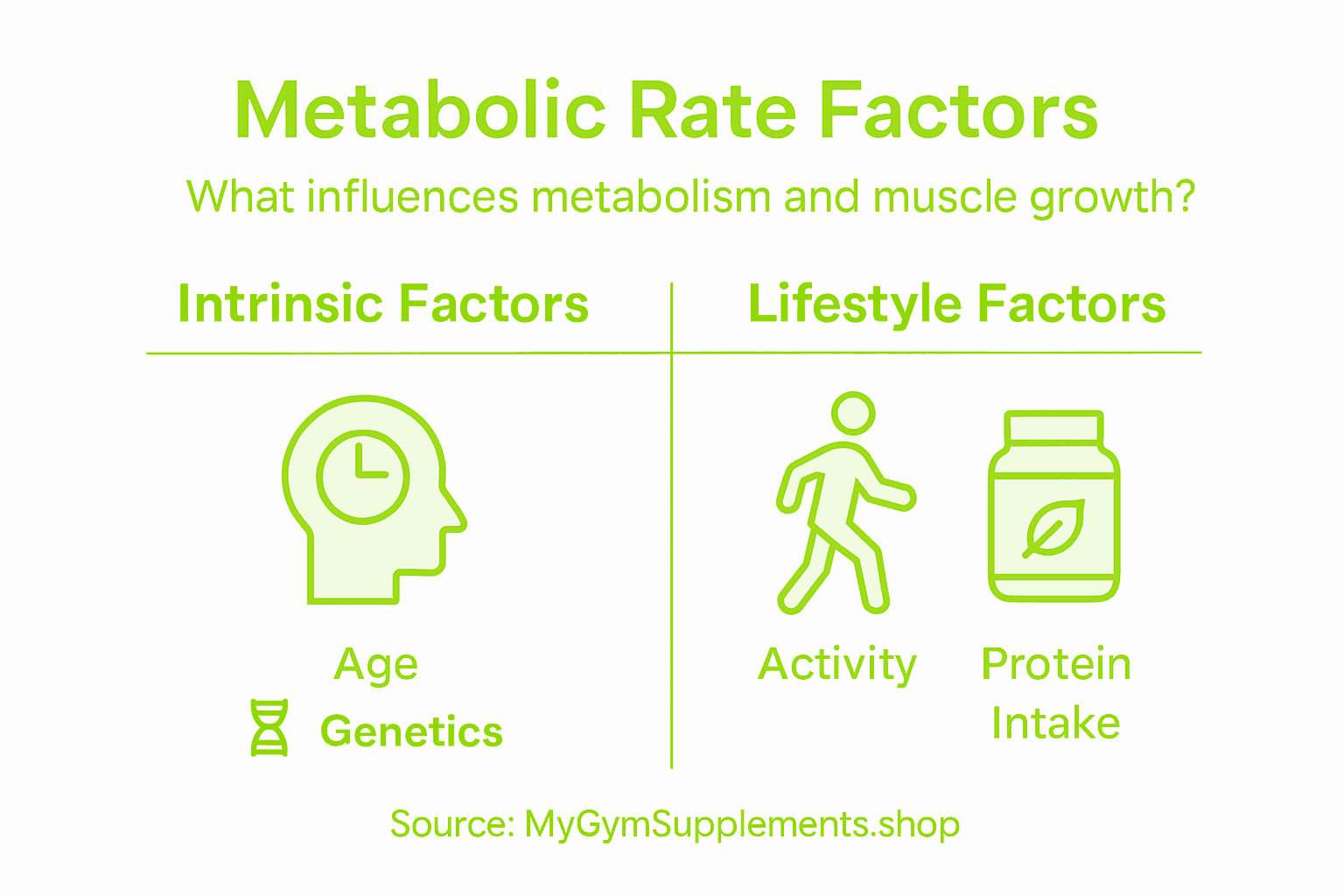
Age, biological sex, and genetics form the intrinsic foundation of your metabolic rate, and whilst you cannot change these, understanding their influence helps you set realistic expectations. Metabolic rate varies based on age, sex, and physiological changes, with women typically experiencing metabolic decline with age, particularly post-menopause, whilst men show different metabolic responses. A 20-year-old naturally possesses a higher metabolic rate than a 50-year-old, all else equal. Women often face steeper metabolic decline than men as they age, which is why adjusting nutrition and training strategy becomes increasingly important for maintaining body composition in your 40s and beyond. Genetics influence your cell size, enzyme efficiency, and how readily your body partitions nutrients toward muscle versus fat storage. Some people genuinely do have “faster” metabolisms, meaning their cells burn calories more efficiently at rest. However, genetics account for only 20-30% of metabolic variation. The remaining 70-80% comes from factors you control: training, nutrition, sleep, stress, and activity level.
Activity level and training stimulus directly amplify your metabolic rate in multiple ways. High-intensity resistance training creates an “afterburn” effect called excess post-exercise oxygen consumption (EPOC), where your metabolic rate remains elevated for hours after training. This effect scales with training intensity and muscle mass engaged. Heavy compound lifts produce greater EPOC than isolated movements. Your daily non-exercise activity thermogenesis (NEAT) also matters significantly. Walking, fidgeting, occupational activity, and general movement accumulate throughout the day. Someone who walks 10,000 steps daily burns substantially more calories than someone sedentary, independent of formal exercise. For bodybuilders balancing muscle gain and fat loss, increasing NEAT through additional walking or activity provides extra caloric deficit without sacrificing muscle through aggressive dieting.
Nutrition and hormonal status profoundly influence metabolic rate through multiple mechanisms. Consuming adequate protein increases thermogenesis because digesting protein demands more energy than digesting carbohydrates or fats. This is why higher-protein diets support fat loss beyond simple caloric restriction. Sufficient caloric intake maintains hormonal balance critical for metabolism. Severe caloric restriction triggers metabolic adaptation, where your body down-regulates metabolic rate to preserve energy. Sleep quality and duration influence hormones like leptin and ghrelin that regulate appetite and metabolic efficiency. Chronic stress elevates cortisol, which promotes fat storage particularly around the midsection. Temperature exposure, particularly cold exposure, activates brown adipose tissue and increases metabolic demand. Environmental factors create synergistic interactions with intrinsic biological factors, meaning your total metabolic rate reflects the combined influence of multiple factors working together rather than in isolation.
Here’s a summary of major factors affecting your metabolic rate:
| Factor | Influence on Metabolic Rate | Modifiable by Lifestyle? |
|---|---|---|
| Muscle Mass | Increases resting calorie burn | Yes |
| Age | Generally decreases with ageing | No |
| Sex | Women may experience quicker decline | No |
| Genetics | Determines cell efficiency | No (mostly) |
| Training Level | Raises activity-based expenditure | Yes |
| Nutrition | Alters hormonal balance, thermogenesis | Yes |
Pro tip: Focus on increasing lean muscle mass through consistent resistance training and adequate protein intake, as this creates the largest lasting boost to resting metabolic rate, making sustainable fat loss far easier than relying solely on caloric restriction or cardio.
Mistakes That Sabotage Your Metabolism
You can understand metabolism perfectly, nail your training programme, and still sabotage your results through preventable mistakes. These errors are so common that most people commit them without realising the damage they’re causing. The frustrating part is that fixing them requires no fancy supplements or complicated protocols. It requires consistency and attention to the basics. The first major mistake is eating too little. This sounds counterintuitive to people chasing fat loss, but severe caloric restriction backfires metabolically. When you consume far below your maintenance calories for extended periods, your body adapts by downregulating metabolic rate to preserve energy. Your hormones shift unfavourably. Leptin drops, increasing hunger signals. Testosterone and growth hormone decline, making muscle retention nearly impossible during a deficit. You might lose weight initially, but that weight includes significant muscle tissue, which actually lowers your baseline metabolic rate permanently. Then when you return to normal eating, you regain fat preferentially because your metabolism is now slower. This is metabolic adaptation in action, and it’s why extreme crash diets produce such poor long-term results.
The second major error is insufficient protein intake. Protein serves multiple critical functions for metabolism. It has the highest thermic effect of all macronutrients, meaning your body burns more calories digesting protein than digesting carbohydrates or fats. Protein also preserves muscle mass during caloric deficits, and muscle tissue is metabolically active. When protein intake falls too low, your body breaks down muscle for amino acids, reducing your resting metabolic rate. For vegan athletes, this becomes even more critical because plant-based proteins have lower bioavailability and incomplete amino acid profiles compared to animal sources. Meeting adequate total protein intake often requires higher volumes of plant foods or strategic supplementation with plant-based protein powders. The third mistake is ignoring sleep quality and circadian rhythm consistency. Disruptions to circadian rhythm through irregular sleep and meal times temporarily disrupt metabolism, affecting energy expenditure, glucose metabolism, and digestion rate. Even within just a few days of poor sleep or irregular schedules, metabolic efficiency declines. Chronic sleep deprivation elevates cortisol, promotes insulin resistance, and shifts your body toward fat storage rather than utilisation. Consistency matters more than perfection here. Maintaining regular sleep and meal times keeps your hormones stable and your metabolism optimised.
The fourth critical mistake is chronic stress without recovery. Your nervous system has two modes: sympathetic (fight or flight) and parasympathetic (rest and digest). Modern life keeps most people locked in sympathetic overdrive. Chronic stress elevates cortisol continuously, which suppresses thyroid function, impairs nutrient absorption, and promotes abdominal fat storage. For muscle builders, high cortisol also increases protein breakdown, working directly against muscle growth goals. Stress management isn’t optional. It’s metabolic medicine. Similarly, a sedentary lifestyle outside formal training destroys metabolic efficiency. You might train hard for one hour daily, but if you’re sitting the remaining 23 hours, your total daily energy expenditure plummets. Non-exercise activity thermogenesis (NEAT) accounts for 15-30% of your total daily expenditure. Walking more, taking stairs, standing whilst working, and general movement accumulate significantly. The fifth mistake is neglecting gut health, which affects nutrient absorption and hormone balance fundamentally. Poor gut health reduces your ability to extract nutrients from food, meaning you absorb fewer amino acids, vitamins, and minerals despite eating adequate amounts. This undermines training recovery and muscle growth. Chronic inflammation from poor gut health also elevates systemic cortisol and impairs metabolic regulation.
Pro tip: Prioritise consistency over intensity: maintain regular sleep times, eat at roughly the same hours daily, hit adequate protein intake every single day, and manage stress through movement or meditation rather than chasing extreme protocols that you cannot sustain long-term.
Unlock Your Metabolism’s Full Potential for Muscle Growth
Understanding the complex ways metabolism drives muscle building is the first step to maximising your training results. Whether you are focused on optimising mechanical tension through heavy lifts or harnessing metabolic stress with high-rep sets, your nutritional strategy must match your metabolic needs. Key challenges such as maintaining adequate protein intake, balancing carbohydrate timing, and supporting recovery can all influence how effectively your metabolism supports muscle hypertrophy and fat loss.
Empower your progress with targeted supplements from MyGymSupplements.shop. Explore premium protein blends including plant-based and whey isolate to ensure your muscles receive the crucial amino acids they require. Complement your routine with performance-boosting pre-workouts, muscle preservation essentials like amino acids, and recovery aids that help you bounce back stronger. Don’t let metabolic pitfalls like insufficient protein or poor nutrient timing slow you down. Take control now by visiting MyGymSupplements.shop and discover products designed to amplify your metabolism, fuel your training, and accelerate your muscle gains today.
Frequently Asked Questions
What is metabolism and how does it affect muscle growth?
Metabolism refers to the sum of chemical reactions in your body that convert food into energy and building blocks essential for functioning. A better understanding of metabolism helps optimise training and supplementation strategies for muscle growth.
How can I increase my metabolic rate for better muscle growth?
Increasing your muscle mass through resistance training is the most effective way to boost your metabolic rate. Adequate protein intake also supports muscle maintenance and growth, which further elevates metabolism.
What are the main types of metabolism during exercise?
The two primary types of metabolism during exercise are aerobic and anaerobic metabolism. Aerobic metabolism requires oxygen and is used for prolonged, lower-intensity activities, while anaerobic metabolism functions without oxygen and fuels short, high-intensity efforts like weight training.
How does nutrition influence my metabolism and muscle-building process?
Nutrition plays a pivotal role in metabolism. Adequate protein intake enhances muscle protein synthesis, while carbohydrate timing helps to fuel workouts and replenish muscle glycogen. A balanced diet helps maintain hormonal balance and supports overall metabolic efficiency.
Recommended
- What is Muscle Catabolism? Understanding Its Importance – MyGymSupplements
- What is Muscle Protein Synthesis? Understanding Its Importance – MyGymSupplements
- What is Lean Muscle? Understanding Its Importance and Function – MyGymSupplements
- What is Muscle Hypertrophy? Understanding Its Importance – MyGymSupplements
- Muskeln trainieren: Tipps für effektives Training

0 comments