

Most british bodybuilders know that choosing the right protein supplement can make or break your progress in the gym. With over 65% of British adults experiencing some level of lactose intolerance, selecting between protein isolate and concentrate is more than just a taste preference. This guide breaks down exactly what sets these two protein sources apart, so you can confidently fuel your muscle gain and recovery with the best option for your goals.
Table of Contents
- Protein Isolate And Concentrate Explained
- Processing Methods And Nutritional Differences
- Lactose Content And Suitability For UK Users
- Impact On Muscle Gain And Recovery Outcomes
- How To Choose For Your Fitness Goals
- Common Myths And Choosing The Right Product
Key Takeaways
| Point | Details |
|---|---|
| Protein Isolate Advantage | Protein isolates, with 90% or higher protein content, are ideal for rapid muscle recovery and lean muscle development. |
| Protein Concentrate Nutrients | Protein concentrates contain 70-80% protein and retain more natural nutrients, making them suitable for those seeking balanced nutrition. |
| Lactose Consideration | Isolates have less than 1% lactose, making them a better choice for individuals with lactose sensitivity in the UK. |
| Fitness Goal Alignment | Choose isolates for cutting and immediate recovery, while concentrates are preferable for muscle volume and sustained energy needs. |
Protein isolate and concentrate explained
When exploring protein supplements for muscle gain, understanding the differences between protein isolate and concentrate becomes crucial for optimising your nutrition strategy. These two protein types might seem similar, but they have distinct processing methods and nutritional profiles that can significantly impact your fitness goals.
Protein isolates undergo more intensive processing compared to concentrates, which results in a higher protein content and lower levels of fat and carbohydrates. Through a filtration process that removes most non-protein components, isolates offer a more purified protein source with typically 90% or more pure protein by weight. Concentrates, in contrast, contain around 70-80% protein, with the remaining percentage comprising carbohydrates and fats.
The key distinction lies in how these protein types are manufactured and their subsequent nutritional composition. Concentrates are produced through ultrafiltration or microfiltration, which preserves more of the original milk components. Isolates, however, go through additional processing steps like ion-exchange or cross-flow microfiltration to remove nearly all non-protein elements. This means isolates are faster absorbing, making them ideal for post-workout recovery when your muscles need rapid protein synthesis.
Pro tip: Choose protein isolates if you’re seeking a leaner protein source with faster absorption, and opt for concentrates if you prefer a more whole-food protein supplement with additional nutrients.
Here’s how protein isolate and concentrate differ in key characteristics for athletes:
| Attribute | Protein Isolate | Protein Concentrate |
|---|---|---|
| Protein Content | Around 90% or higher | Typically 70–80% |
| Fat & Carbohydrate | Very low levels | Higher, includes more nutrients |
| Lactose Content | Less than 1% | Usually 4–5% |
| Absorption Speed | Fast; ideal post-workout | Gradual; supports sustained gain |
| Ideal For | Cutting, lean muscle, recovery | Bulking, balanced nutrition |
Processing methods and nutritional differences
Understanding the intricate differences in processing methods reveals why protein isolates and concentrates perform distinctly in muscle building and nutrition. Protein extraction techniques fundamentally transform the nutritional composition of these supplements, impacting their protein purity, digestibility, and overall effectiveness for athletes.
The manufacturing process represents the primary distinguishing factor between protein isolates and concentrates. Protein concentrates utilise ultrafiltration or microfiltration techniques that preserve more natural milk components, resulting in a protein powder containing approximately 70-80% protein. These retain greater quantities of beneficial compounds like lactose and minerals. In contrast, protein isolates undergo more rigorous processing, employing advanced techniques such as ion-exchange or cross-flow microfiltration to strip away nearly all non-protein elements, producing an ultra-pure product with 90% or more protein content.

Nutritional profiles differ significantly between these protein types. Concentrates provide a more whole-food protein experience with additional nutrients, making them suitable for individuals seeking a more balanced supplement. Isolates, being more refined, offer faster protein absorption and lower fat and carbohydrate content, rendering them ideal for athletes focused on lean muscle development and precise macronutrient intake. The processing intensity directly influences protein solubility, digestibility, and amino acid availability.
Pro tip: Select protein isolates for rapid post-workout recovery and precise protein intake, while choosing concentrates when you prefer a more comprehensive nutritional profile with additional natural milk components.
Lactose content and suitability for UK users
For UK consumers navigating protein supplement choices, understanding lactose content is paramount, especially for those with dietary sensitivities. Whey protein’s lactose variations significantly impact digestibility and suitability for individuals experiencing lactose intolerance or seeking specific nutritional profiles.
Protein concentrates naturally retain higher lactose levels, typically containing 4-5% lactose, which can cause digestive discomfort for approximately 65% of the British population with some degree of lactose sensitivity. In contrast, protein isolates undergo advanced processing techniques that dramatically reduce lactose content, making them a more digestible alternative. The filtration process strips away most milk sugars, resulting in a product containing less than 1% lactose - a crucial consideration for those with mild to moderate lactose intolerance.
The nuanced differences between protein types become particularly relevant for UK fitness enthusiasts managing dietary restrictions. Hydrolysed protein variants offer an additional option, often containing negligible lactose amounts and providing rapid protein absorption. For individuals with severe lactose intolerance, consulting healthcare professionals and carefully examining supplement labels becomes essential to selecting the most appropriate protein source that aligns with individual nutritional requirements and digestive capabilities.
Pro tip: If you experience lactose sensitivity, prioritise protein isolates or hydrolysed proteins, and always check the product’s nutritional information for precise lactose content before purchasing.
Impact on muscle gain and recovery outcomes
Protein supplementation plays a critical role in muscle development, with protein isolates and concentrates offering distinct advantages for athletes seeking optimal muscle gain and recovery. Understanding muscle recovery strategies becomes essential in selecting the most effective protein supplement for individual fitness goals.
Protein isolates demonstrate superior attributes for rapid muscle protein synthesis due to their higher protein concentration and faster absorption rates. With approximately 90% pure protein content, isolates provide a more concentrated amino acid profile that supports faster muscle repair and growth. This makes them particularly advantageous for athletes performing high-intensity training, where quick nutrient delivery can significantly impact muscle recovery and development. Protein concentrates, while still effective, offer a more gradual protein release and contain additional nutrients that can support sustained muscle development.
Research indicates that protein quality, amino acid composition, and absorption speed directly influence muscle protein synthesis and recovery outcomes. Isolates typically contain higher levels of branched-chain amino acids (BCAAs), which are crucial for muscle repair and growth. The refined processing of isolates ensures a more rapid and efficient protein uptake, potentially leading to enhanced muscle protein synthesis compared to traditional concentrate supplements. This makes isolates particularly compelling for athletes seeking precise nutritional strategies to maximise muscle gain and minimise recovery time.
Pro tip: Time your protein intake strategically, consuming isolates immediately post-workout for rapid muscle recovery and concentrates during periods of sustained energy requirement.
How to choose for your fitness goals
Selecting the right protein supplement requires a strategic approach tailored to your specific fitness objectives and performance targets. Your individual fitness goals will determine whether protein isolates or concentrates serve you best, with each variant offering unique advantages for different training outcomes.
For athletes focused on lean muscle development and rapid recovery, protein isolates emerge as the superior choice. Their high protein concentration (90%) and swift absorption rate make them ideal for individuals pursuing muscle definition, weight management, or high-intensity training programmes. Bodybuilders and strength athletes seeking minimal fat intake will particularly benefit from isolates’ refined protein profile. Conversely, individuals prioritising muscle volume and gradual nutrient release might find protein concentrates more suitable, as they provide additional nutrients and a more sustained protein absorption rate.
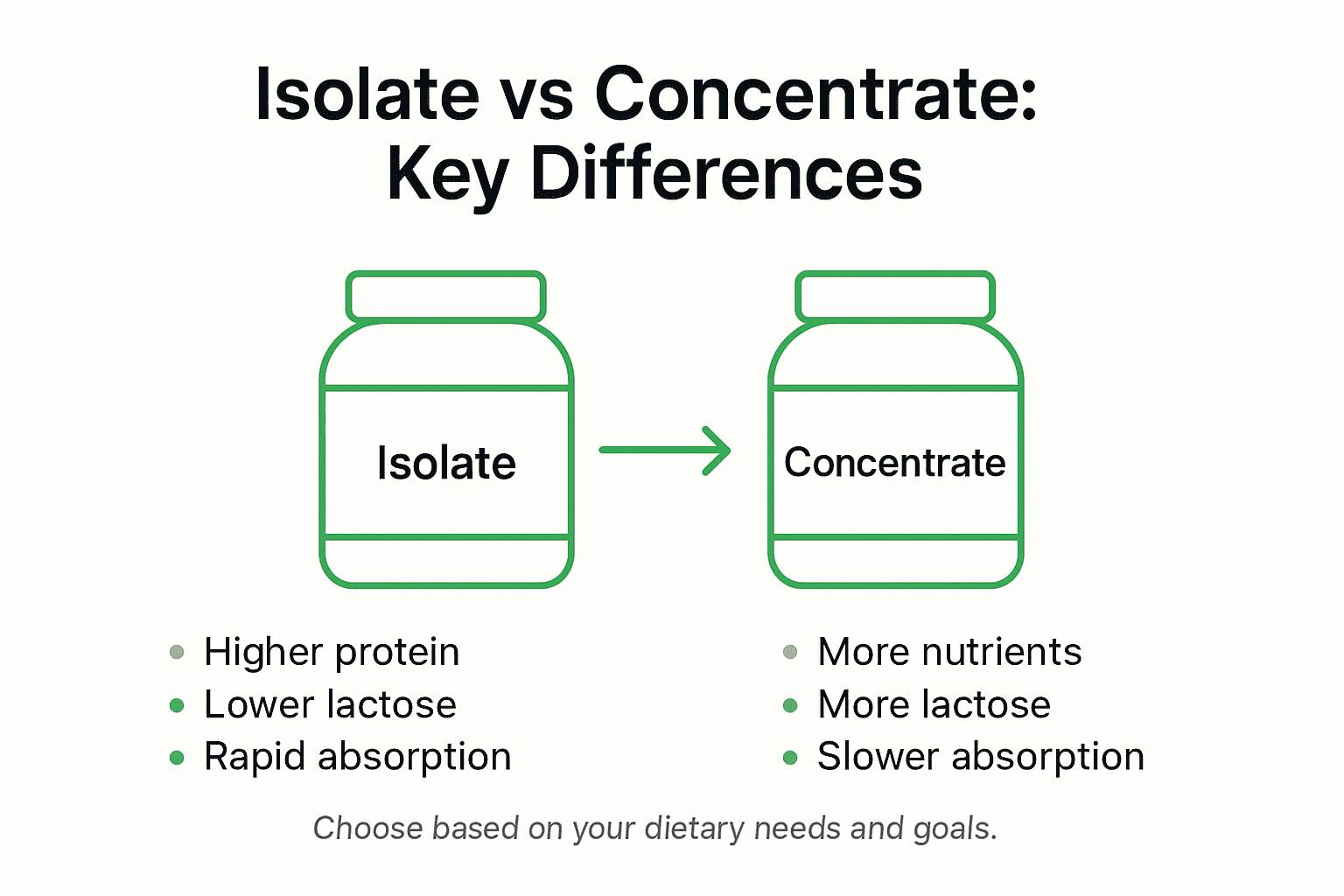
Your specific training phase also influences protein supplement selection. During cutting cycles or weight loss periods, protein isolates offer a more precise macronutrient profile with minimal additional calories. For muscle-building phases or bulking stages, protein concentrates can provide supplementary nutrients that support overall muscle growth and sustained energy levels. Athletes should consider factors like training intensity, body composition goals, dietary restrictions, and recovery requirements when making their selection.
Pro tip: Experiment with both protein isolates and concentrates, tracking your body’s response and performance metrics to identify the optimal supplement for your unique fitness journey.
Consider these factors before choosing your supplement:
| Fitness Goal | Recommended Protein Type | Key Benefit |
|---|---|---|
| Rapid recovery | Isolate | Faster muscle synthesis |
| Muscle volume increase | Concentrate | Extra nutrients for growth |
| Weight management | Isolate | Minimal fat, carb intake |
| Lactose sensitivity | Isolate or hydrolysed | Easier digestion |
Common myths and choosing the right product
Protein supplements are often surrounded by misconceptions that can mislead athletes and fitness enthusiasts. Debunking protein supplement myths requires a nuanced understanding of how different protein types genuinely impact muscle development and nutrition.
One prevalent myth suggests that protein isolates are universally superior to concentrates, which oversimplifies the complex nutritional landscape. In reality, both protein types offer distinct advantages depending on individual fitness goals and metabolic requirements. Protein isolates are not inherently better but provide a more refined protein source with higher protein concentration and lower fat content. Concentrates, conversely, retain more natural milk components and can offer additional nutritional benefits that some athletes find advantageous for sustained muscle growth.
Another common misconception is that protein isolates are completely lactose-free. While isolates undergo more intensive processing that significantly reduces lactose content, they are not entirely lactose-free. Athletes with severe lactose intolerance should still carefully examine product labels and potentially consult nutritional experts. The key to selecting the right protein supplement lies not in marketing claims, but in understanding your personal nutritional needs, training objectives, and individual physiological responses.
Pro tip: Always read product nutritional labels carefully, experiment with different protein supplements, and track your body’s response to determine the most effective option for your specific fitness journey.
Choose the Right Protein Supplement to Maximise Your Muscle Gain
Understanding the difference between protein isolate and concentrate is essential to overcoming common challenges such as optimising muscle recovery or managing lactose sensitivity. With key factors like protein content, absorption speed and lactose levels playing a vital role, selecting the perfect supplement tailored to your fitness goals can be confusing. Our expert-curated range addresses these concerns directly to support your journey towards lean muscle definition or sustained muscle volume.
Explore the specialised protein options at MyGymSupplements.shop where you can find high-quality isolates for rapid post-workout recovery or nutrient-rich concentrates for balanced muscle growth. Don’t wait to elevate your performance. Visit our store now and make an informed choice that aligns perfectly with your fitness ambitions.
Frequently Asked Questions
What is the main difference between protein isolate and concentrate?
Protein isolate undergoes more extensive processing, resulting in higher protein content (90% or more) and lower fat and carbohydrate levels, while concentrate contains around 70-80% protein and retains more natural nutrients.
Which protein type is better for muscle recovery?
Protein isolates are ideal for muscle recovery because they are quickly absorbed by the body, providing a concentrated amino acid profile that supports rapid muscle repair following strenuous exercise.
How do I choose between protein isolate and concentrate based on my fitness goals?
If your goal is lean muscle development and rapid recovery, protein isolates are recommended. Conversely, if you’re looking to increase muscle volume and prefer a product with additional nutrients, protein concentrates may be more suitable.
Are protein isolates completely lactose-free?
Protein isolates are not entirely lactose-free but contain less than 1% lactose due to the processing methods they undergo. This makes them a better choice for individuals with mild to moderate lactose intolerance.

0 comments