

Muscle soreness after a tough workout can linger long enough to derail your next training session. For many British athletes and fitness enthusiasts, finding ways to support recovery and boost endurance is a top priority. Magnesium ranks as a powerful ally in this quest, influencing everything from muscle function and energy production to nerve signalling. This guide breaks down how magnesium can elevate recovery, supports peak performance, and which supplement types most effectively fit your unique fitness goals.
Table of Contents
- What Is Magnesium And Why It Matters
- Magnesium Types And Their Unique Roles
- How Magnesium Supports Peak Performance
- Consequences Of Deficiency For Athletes
- Optimal Supplementation And Dietary Sources
Key Takeaways
| Point | Details |
|---|---|
| Importance of Magnesium | Magnesium is essential for muscle function, energy metabolism, and overall health, particularly for athletes. |
| Magnesium Deficiency Consequences | Low magnesium levels can lead to muscle weakness, increased fatigue, and compromised recovery, affecting athletic performance. |
| Types of Magnesium Supplements | Different forms of magnesium, such as Citrate and Glycinate, offer varied benefits and absorption rates; personalised selection is crucial. |
| Dietary Sources and Strategies | Incorporate magnesium-rich foods like nuts, legumes, and leafy greens, and consider supplementation for optimal intake. |
What Is Magnesium And Why It Matters
Magnesium is a critical mineral essential for numerous physiological functions in the human body. Often overlooked, this powerful micronutrient plays a fundamental role in maintaining overall health, particularly for athletes and fitness enthusiasts.
The body relies on magnesium for hundreds of biochemical reactions, making it indispensable for optimal performance. Hundreds of bodily functions depend on this mineral, ranging from muscle contraction to nerve signalling and energy production.
Key areas where magnesium demonstrates its importance include:
- Muscle and nerve function regulation
- Blood sugar and blood pressure maintenance
- Protein, bone, and DNA synthesis
- Energy metabolism and production
- Supporting cardiovascular health
Most magnesium resides within bones and soft tissues, with minimal quantities circulating in the bloodstream. Dietary sources play a crucial role in maintaining adequate levels, including:
- Legumes
- Nuts and seeds
- Whole grains
- Leafy green vegetables
- Fruits
Deficiency can manifest subtly, often without immediate severe symptoms. However, prolonged low levels might contribute to significant health challenges such as high blood pressure, potential heart complications, and decreased bone density.
Pro tip: Consider consulting a healthcare professional to assess your individual magnesium requirements, especially if you maintain an intense training regimen.
Magnesium Types And Their Unique Roles
Magnesium supplements come in multiple distinct forms, each offering unique benefits and absorption characteristics for different physiological needs. Understanding these variations can help individuals select the most appropriate supplement for their specific health objectives.
Different magnesium types serve specific physiological purposes, with varying levels of bioavailability and targeted health advantages. The most common forms include:
-
Magnesium Citrate: Highly absorbable, excellent for:
- Constipation relief
- Improving digestive function
- Supporting metabolic processes
-
Magnesium Glycinate: Ideal for:
- Muscle relaxation
- Reducing anxiety
- Supporting sleep quality
- Minimal gastrointestinal side effects
-
Magnesium Oxide: Typically used for:
- Laxative purposes
- Antacid treatments
- Lower absorption rates
-
Magnesium Malate: Beneficial for:
- Chronic pain management
- Energy production
- Muscle recovery
-
Magnesium L-Threonate: Specialised for:
- Cognitive function
- Potential brain health support
- Neurological performance
Absorption rates and specific health needs determine optimal magnesium supplementation, making personalised selection crucial. Athletes and fitness enthusiasts should consider their individual requirements when choosing a magnesium supplement.
Consultation with healthcare professionals can provide tailored guidance on selecting the most appropriate magnesium type based on individual physiological needs, training intensity, and specific health objectives.
Here’s how common magnesium types differ in their main uses and absorption efficiency:
| Magnesium Form | Primary Use | Gastrointestinal Tolerance | Absorption Efficiency |
|---|---|---|---|
| Citrate | Digestive and metabolic support | Moderate | High |
| Glycinate | Sleep and relaxation | High | Very high |
| Oxide | Laxative and antacid | Low | Low |
| Malate | Fatigue and muscle recovery | High | Moderate |
| L-Threonate | Cognitive and neurological support | High | Moderate |
Pro tip: Consider conducting a thorough health assessment to identify the most suitable magnesium supplement that aligns with your specific fitness and wellness goals.
How Magnesium Supports Peak Performance
Peak athletic performance demands precise physiological balance, with magnesium playing a critical role in supporting optimal muscle function and metabolic efficiency. Athletes and fitness enthusiasts require this essential mineral to maintain consistent high-level performance across multiple bodily systems.
Magnesium is fundamental for key metabolic reactions, influencing several crucial performance parameters:
- Energy Production: Supports ATP synthesis and metabolic processes
- Muscle Function: Regulates muscle contraction and prevents cramping
- Electrolyte Balance: Maintains critical mineral homeostasis
- Oxidative Stress Response: Helps manage cellular stress during intense training
- Nerve Signalling: Ensures efficient neuromuscular communication
Metabolic Benefits include direct performance enhancement mechanisms such as:
- Facilitating protein synthesis for muscle recovery
- Supporting cardiovascular health and endurance
- Reducing exercise-induced inflammation
- Improving oxygen utilisation during high-intensity workouts
- Enhancing overall metabolic efficiency
Adequate magnesium intake is crucial for athletes’ sustained performance, with research indicating significant improvements in strength, endurance, and recovery when nutritional levels are optimised. The mineral’s role extends beyond immediate performance, contributing to long-term athletic development and injury prevention.

Competitive athletes should prioritise consistent magnesium intake through a combination of dietary sources and targeted supplementation to maintain peak physiological function and support intensive training regimens.
Pro tip: Consider tracking your magnesium levels through regular blood tests and consulting a sports nutritionist to develop a personalised supplementation strategy.
Consequences Of Deficiency For Athletes
Magnesium deficiency poses significant challenges for athletes, potentially undermining performance, recovery, and overall physiological function. Understanding these consequences is crucial for maintaining peak athletic potential and preventing long-term health complications.
Magnesium insufficiency can dramatically impair muscle function, presenting several critical performance-related risks:
- Muscle Weakness: Reduced strength and contractile efficiency
- Increased Fatigue: Faster onset of exhaustion during training
- Compromised Recovery: Slower muscle repair and regeneration
- Electrolyte Imbalances: Disrupted mineral metabolism
- Higher Injury Susceptibility: Reduced muscular resilience
The specific performance impacts include:
- Reduced energy metabolism efficiency
- Diminished oxygen utilisation during workouts
- Impaired protein synthesis mechanisms
- Increased oxidative stress
- Potential cardiovascular strain
Athletes with low magnesium levels experience multiple performance limitations, ranging from muscle cramps to elevated anxiety and delayed recovery. These challenges can create a cascading effect that progressively undermines training quality and competitive performance.
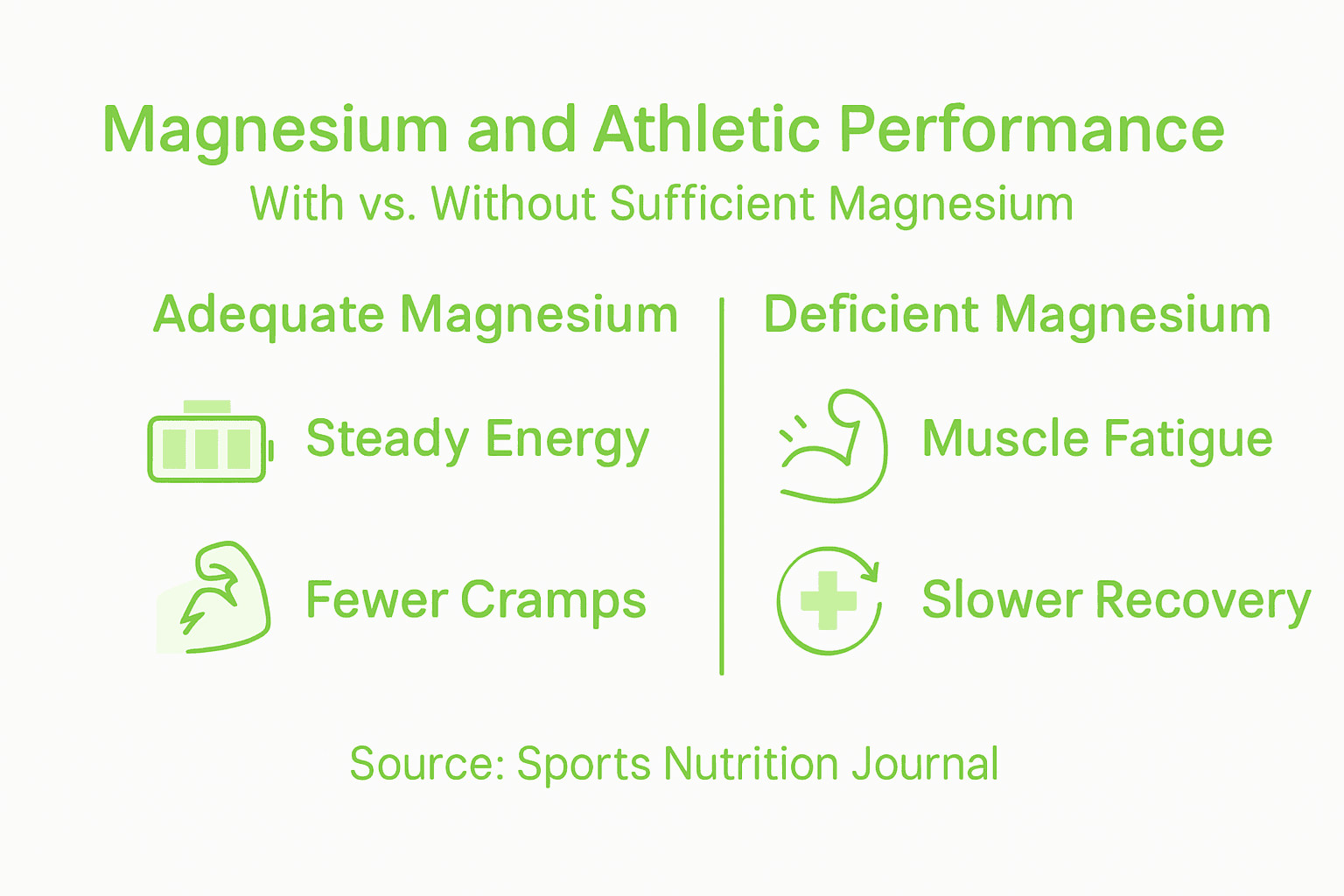
Prolonged magnesium deficiency transforms from a minor nutritional concern into a significant athletic handicap, potentially derailing months of dedicated training and performance development.
This table summarises the impact of magnesium on athletic performance and the consequences of deficiency:
| Performance Factor | With Adequate Magnesium | With Deficiency |
|---|---|---|
| Muscle Function | Optimal contractions | Weakness and cramps |
| Energy Levels | Sustained high endurance | Quick fatigue |
| Recovery Speed | Fast muscle repair | Slow regeneration |
| Stress Response | Balanced oxidative control | Increased cellular stress |
Pro tip: Conduct regular blood tests to monitor your magnesium levels and integrate magnesium-rich foods into your nutrition strategy to prevent potential deficiency.
Optimal Supplementation And Dietary Sources
Magnesium intake requires a strategic approach combining dietary sources and targeted supplementation to meet the unique demands of active individuals. Understanding how to optimise magnesium consumption is crucial for maintaining peak physiological performance.
Dietary sources provide foundational magnesium intake, with several nutrient-rich options available:
-
Nuts and Seeds:
- Cashews
- Brazil nuts
- Pumpkin seeds
-
Legumes:
- Black beans
- Chickpeas
- Lentils
-
Whole Grains:
- Brown rice
- Quinoa
- Oatmeal
-
Leafy Greens:
- Spinach
- Beet greens
- Swiss chard
-
Additional Sources:
- Avocado
- Bananas
- Dark chocolate
Supplement Selection Considerations:
- Choose highly bioavailable forms
- Match supplement to specific physiological needs
- Consider absorption rates
- Verify recommended daily allowances
- Consult healthcare professionals
Responsible supplementation requires careful selection of magnesium types, including citrate, aspartate, and lactate, which demonstrate superior absorption compared to standard oxide forms.
Individuals with increased physical demands, dietary restrictions, or absorption challenges may require targeted supplementation to maintain optimal magnesium levels and support comprehensive athletic performance.
Pro tip: Rotate magnesium supplement types and consistently monitor your body’s response to ensure maximum absorption and effectiveness.
Boost Your Active Lifestyle With Targeted Magnesium Support
The article highlights the critical role magnesium plays in sustaining muscle function, energy metabolism, and recovery for athletes and fitness enthusiasts. If you experience muscle cramps, fatigue, or slow recovery, these could be signs of magnesium deficiency sabotaging your performance. Addressing this requires more than just diet—it calls for personalised supplementation that matches your unique physiological needs and training intensity.
At MyGymSupplements.shop, you can explore a wide selection of high-quality magnesium supplements designed for optimal absorption and performance support. Whether you aim to enhance muscle relaxation, boost energy production, or improve cognitive function, we offer products that fit your goals. Shop now to ensure your magnesium levels support every workout and recovery session.
Take control of your health and performance today by visiting our homepage and discovering supplements tailored for active lifestyles. Don’t wait until deficiency holds back your progress—fuel your best with MyGymSupplements.shop.
Frequently Asked Questions
What are the main benefits of magnesium for athletes?
Magnesium supports energy production, muscle function, electrolyte balance, oxidative stress response, and nerve signalling, all of which contribute to enhanced athletic performance.
How does magnesium deficiency affect athletic performance?
Magnesium deficiency can lead to muscle weakness, increased fatigue, compromised recovery, electrolyte imbalances, and a higher susceptibility to injuries, negatively impacting training and performance.
What types of magnesium supplements are beneficial for athletes?
Common magnesium supplements like magnesium citrate, glycinate, and malate offer unique benefits. Citrate is good for metabolic support, glycinate promotes relaxation and sleep, while malate helps with energy production and muscle recovery.
How can I ensure I am getting enough magnesium in my diet?
Incorporate magnesium-rich foods such as nuts, seeds, legumes, whole grains, and leafy greens into your meals. You may also consider supplementation if dietary sources are insufficient, but consult a healthcare professional first.
Recommended
- Why Supplement With Magnesium: Complete Guide – MyGymSupplements
- 7 Key Advantages of Multivitamins for Fitness Success – MyGymSupplements
- Unlock Performance Potential with Trained By JP Magnesium – MyGymSupplements
- Unlock Performance Potential with Trained By JP Magnesium
- Best cycling sunglasses for men 40+

0 comments