

Chasing heavy lifts yet feeling held back by fatigue and slow recovery is a familiar frustration for many British bodybuilders. Understanding your current fitness and recovery routine matters, as research highlights that monitoring stress load and recovery experience directly impacts workout performance and muscle gains. This article offers actionable strategies to assess your physical baseline, refine supplement choices, and implement targeted training and recovery techniques for optimal muscle development.
Table of Contents
- Step 1: Assess Current Fitness And Recovery Routine
- Step 2: Optimise Nutrition And Supplement Selection
- Step 3: Enhance Workout Structure And Intensity
- Step 4: Integrate Effective Recovery Techniques
- Step 5: Verify Progress And Adjust Workout Strategies
Quick Summary
| Key Point | Explanation |
|---|---|
| 1. Assess Your Fitness Baseline | Evaluate physical metrics, recovery indicators, and performance markers for tailored training. |
| 2. Focus on Targeted Nutrition | Design a nutrition plan that emphasises protein, complex carbohydrates, and essential supplements. |
| 3. Implement Progressive Overload | Gradually increase workload to ensure continuous muscle growth and prevent training plateaus. |
| 4. Use Effective Recovery Techniques | Prioritise sleep, hydration, and active recovery to enhance recuperation and performance. |
| 5. Track Progress and Adapt | Regularly assess fitness metrics and adjust your training strategy for optimal results. |
Step 1: Assess current fitness and recovery routine
To optimise your workout performance and achieve maximum gains, you must first understand your current fitness baseline. Comprehensive fitness monitoring involves evaluating multiple interconnected parameters that determine your overall physical readiness and recovery potential.
Start by conducting a thorough self-assessment across key performance dimensions:
- Physical metrics: Track body composition, strength levels, endurance capacity
- Recovery indicators: Monitor sleep quality, muscle soreness, energy restoration
- Performance markers: Evaluate workout intensity, repetition range, recovery time between sessions
Professional athletes understand that effective fitness assessment requires systematic tracking. Multidimensional fatigue assessment involves examining physiological, biochemical, and psychological factors that influence your training adaptability.
The most successful athletes use complementary assessment methods like heart rate variability tracking, perceived exertion scales, and detailed workout logs to create a comprehensive performance profile. By understanding your current fitness landscape, you can design targeted interventions that progressively enhance your strength, muscle development, and overall athletic performance.
Expert Tip: Invest in a dedicated fitness tracking journal or digital app to maintain consistent, objective records of your workout performance and recovery metrics.
Here’s a comparison of common fitness tracking tools and their benefits:
| Tool Type | Measurement Focus | Advantages | Typical Users |
|---|---|---|---|
| Fitness journal | Subjective progress | Encourages reflection, motivation | Beginners, all levels |
| Wearable device | Physiological metrics | Continuous, objective data | Enthusiasts, athletes |
| Workout app | Performance logging | Customisable plans, easy analysis | Tech-savvy individuals |
| Heart rate monitor | Recovery assessment | Real-time insights, adapts intensity | Endurance, strength athletes |
Step 2: Optimise nutrition and supplement selection
Nutritional strategies for athletic performance are fundamental to achieving your fitness goals and maximising natural gains. Understanding how to strategically select supplements and design a targeted nutrition plan can dramatically enhance your workout outcomes and overall physical development.
Your nutrition and supplement strategy should focus on several critical components:
- Protein intake: Select high-quality protein sources that support muscle protein synthesis
- Carbohydrate management: Choose complex carbohydrates for sustained energy release
- Supplement selection: Target supplements that complement your specific fitness objectives
- Micronutrient balance: Ensure comprehensive vitamin and mineral coverage
Research on female athletes demonstrates the importance of structured nutritional interventions. Strategic supplement choices like creatine and caffeine can significantly improve performance recovery and muscle adaptation. Consider your individual metabolic requirements, training intensity, and specific fitness goals when developing your nutrition protocol.

Professional athletes understand that nutrition is not a one-size-fits-all approach. Regularly assess and adjust your supplement strategy based on your body’s response, training progression, and emerging scientific research.
Expert Tip: Consult a sports nutritionist to develop a personalised supplement plan tailored precisely to your unique physiological needs and fitness objectives.
Step 3: Enhance workout structure and intensity
High-intensity functional training strategies are crucial for maximising your natural muscle gains and athletic performance. Transforming your workout approach requires strategic planning, progressive overload, and intelligent exercise selection that challenges your body’s physiological adaptations.
To systematically enhance your workout structure, consider implementing these key techniques:
- Progressive overload: Gradually increase weight, repetitions, or training volume
- Compound movements: Prioritise multi-joint exercises that engage multiple muscle groups
- Variation: Rotate exercises to prevent plateaus and maintain muscular adaptation
- Rest intervals: Strategically manage recovery time between sets and workout sessions
High-intensity interval training protocols demonstrate remarkable effectiveness in improving neuromuscular performance. Integrating resistance training, plyometrics, and targeted cardiovascular work can significantly elevate your overall fitness capabilities. Professional athletes understand that intensity is not just about lifting heavy, but about smart, structured training that challenges your physiological limits.
Consistent progression requires periodic assessment and adjustment of your training methodology. Monitor your body’s response, track performance metrics, and be prepared to modify your approach based on your evolving fitness goals.
Expert Tip: Implement a structured training log to objectively track your workout intensities, ensuring continuous and measurable performance improvements.
Step 4: Integrate effective recovery techniques
Advanced recovery strategies are critical for maximising muscle growth, preventing injury, and maintaining optimal athletic performance. Understanding how to strategically support your body’s regeneration processes can dramatically enhance your long-term fitness outcomes.
Implement a comprehensive recovery approach through these essential techniques:
- Active recovery: Engage in low-intensity movement on rest days
- Sleep optimization: Prioritise 7-9 hours of quality sleep nightly
- Nutrition timing: Consume protein and carbohydrate-rich meals post-workout
- Stress management: Use relaxation techniques to reduce physiological tension
- Hydration: Maintain consistent fluid intake throughout the day
Professional athletes recognise that recovery is not a passive process, but an active strategy requiring consistent attention. Recovery-oriented interventions emphasise a holistic approach that considers both physical and psychological components of athletic performance.
Your recovery protocol should be dynamic and personalised, adapting to your body’s changing needs and training intensity. Regular assessment and willingness to adjust your approach are key to sustainable fitness progression.
Expert Tip: Invest in objective recovery tracking tools like heart rate variability monitors to gain precise insights into your body’s recuperation status.
Step 5: Verify progress and adjust workout strategies
Exercise progression strategies are fundamental to maintaining consistent muscle growth and preventing performance plateaus. Your ability to objectively track and adapt your training approach determines long-term fitness success.
Implement a robust progress verification system using these key methods:
- Performance metrics: Track strength gains, repetition ranges, and workout volumes
- Body composition analysis: Measure muscle mass, body fat percentage, and physical changes
- Digital tracking: Utilise fitness apps and wearable technology for precise monitoring
- Periodic assessments: Conduct comprehensive fitness evaluations every 4-6 weeks
- Comparative analysis: Compare current performance against baseline measurements
Digital fitness monitoring tools provide sophisticated approaches to tracking workout progression. Professional athletes understand that data-driven adjustments are crucial for continuous improvement, allowing targeted modifications to training intensity, volume, and exercise selection.
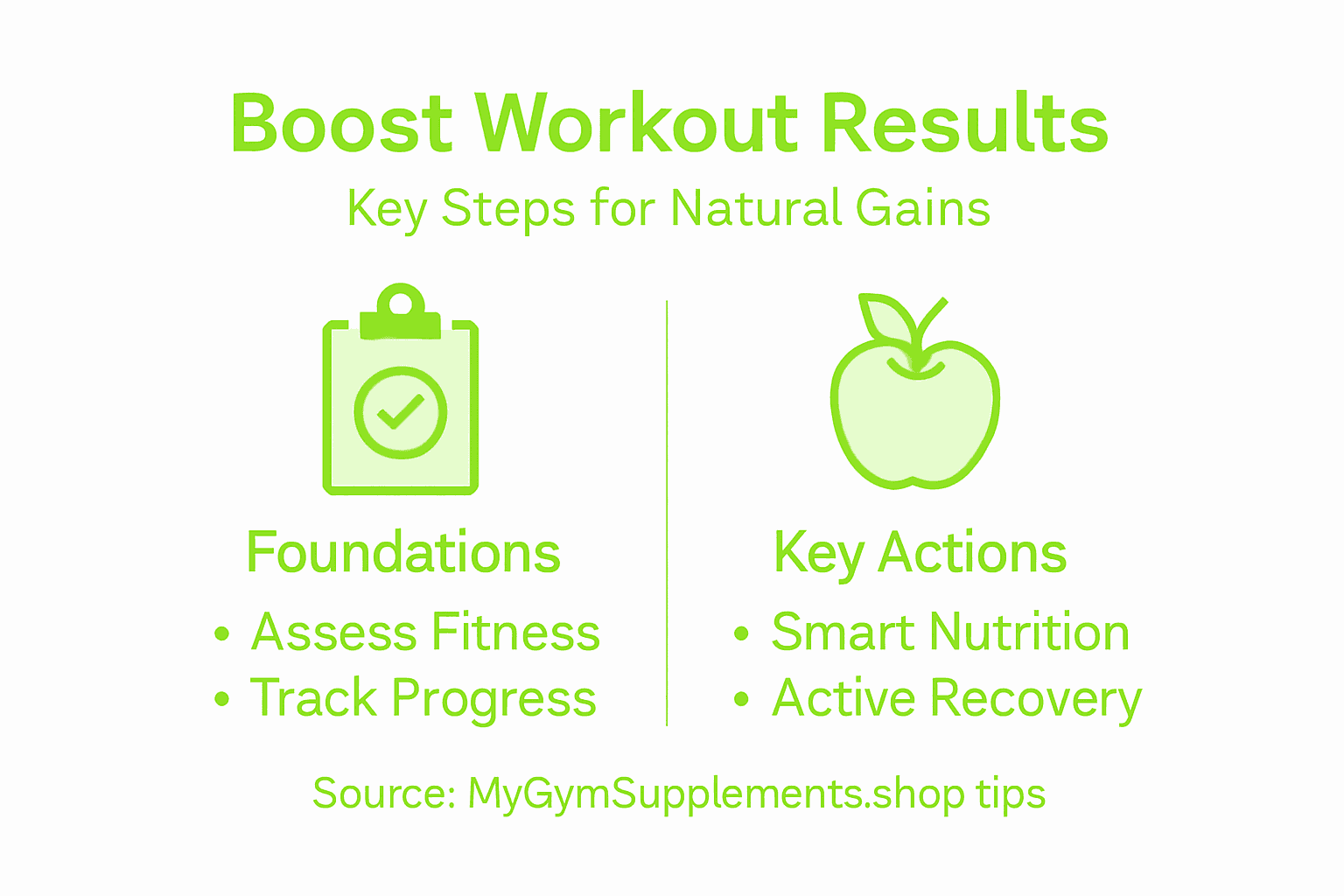
Remember that progress is not linear. Your workout strategy should remain flexible, responding to your body’s changing capabilities and potential limitations. Consistent evaluation and strategic adaptation are the hallmarks of sustainable athletic development.
Expert Tip: Create a detailed workout journal that captures quantitative metrics and subjective experiences to develop a comprehensive understanding of your fitness progression.
This summary highlights essential differences between recovery and progression strategies:
| Approach | Main Goal | Typical Techniques | Adaptation Frequency |
|---|---|---|---|
| Recovery | Prevent injury, restore gains | Sleep, active rest, stress management | Adapt daily |
| Progression | Stimulate muscle growth | Load increase, exercise variation | Evaluate every 4–6 weeks |
Elevate Your Natural Gains with Targeted Supplement Support
Improving your workout performance naturally requires precise attention to nutrition, recovery, and structured training strategies as outlined in the article “How to Improve Workout Performance Naturally for Gains”. If you are struggling to optimise your nutrition and supplement selection, manage recovery effectively, or consistently track your progress, you are not alone. Many athletes and fitness enthusiasts face challenges like achieving adequate protein intake, selecting the right supplements for muscle growth and recovery, and maintaining motivation through data-driven progress verification.
At MyGymSupplements.shop, we understand these critical pain points. Our comprehensive range of supplements includes high-quality proteins, creatine, performance recovery aids, and vital vitamins and minerals designed to support every stage of your fitness journey. Whether you want to boost muscle synthesis, enhance energy levels during high-intensity workouts, or speed up recovery time, our selection aligns perfectly with expert recommendations from the article. Start transforming your routine by exploring our products suited for natural gains and recovery today. Don’t wait to take control of your progress and experience the benefits of a smart, scientifically-backed supplement strategy. Visit MyGymSupplements.shop now to find your perfect fit and achieve the workout results you deserve.
Frequently Asked Questions
How can I assess my current fitness and recovery routine?
To assess your current fitness and recovery routine, start by tracking key performance metrics like strength levels, endurance, and recovery indicators such as sleep quality and muscle soreness. Conduct regular evaluations using a fitness tracking journal to record these metrics consistently over a 4-6 week period.
What nutritional strategies should I use to improve workout performance?
Focus on high-quality protein sources to support muscle growth, complex carbohydrates for sustained energy, and essential vitamins and minerals for overall health. Design a nutrition plan tailored to your fitness goals, ensuring to assess your dietary needs periodically and adjust accordingly.
How can I effectively enhance my workout structure and intensity?
To enhance your workout structure and intensity, implement techniques such as progressive overload by gradually increasing weights or repetitions, and incorporate compound movements to engage multiple muscle groups. Regularly evaluate your workout routine every 4-6 weeks to ensure continuous improvement and prevent plateaus.
What recovery techniques help maximise gains after workouts?
Incorporate active recovery techniques, such as light movement on rest days, and prioritise quality sleep to optimise your muscle recovery. Assess your recovery strategies regularly, making adjustments based on your body’s response and any ongoing changes to your training intensity.
How often should I verify my workout progress?
Verify your workout progress every 4-6 weeks by tracking performance metrics like strength gains and workout volumes, as well as conducting body composition analysis. Use detailed records from a fitness journal to monitor changes and adjust your strategies as needed.

0 comments