

Starting a new fitness routine can feel challenging, especially when every supplement promises faster progress and easier recovery. Many beginners across the United Kingdom look for reliable ways to improve strength and reduce muscle fatigue after workouts, yet the sheer variety of creatine products can be confusing. This guide helps you navigate the world of creatine supplementation, explaining why creatine monohydrate is the gold standard and showing you how to select, dose, and track your results for steady gains and better muscle recovery.
Table of Contents
- Step 1: Choose The Right Type Of Creatine Supplement
- Step 2: Assess Your Starting Point And Fitness Goals
- Step 3: Plan Your Creatine Loading And Daily Dosage
- Step 4: Incorporate Creatine Into Your Daily Routine
- Step 5: Monitor Your Progress And Adjust As Needed
Quick Summary
| Key Point | Explanation |
|---|---|
| 1. Choose Creatine Monohydrate | It is the most researched and effective form, suitable for most users to enhance muscle recovery and strength. |
| 2. Assess Personal Fitness Goals | Determine your body composition and objectives to tailor your creatine use effectively for growth or performance. |
| 3. Follow Loading and Maintenance Phases | Implement a structured approach of 20 grams daily initially, followed by 3-5 grams to sustain muscle levels. |
| 4. Integrate Creatine into Routine | Mix with meals or beverages at convenient times to ensure consistency in supplementation without stress. |
| 5. Monitor Progress and Adjust | Regularly track strength, recovery speed, and energy levels; adjust dosage and intake based on personal responses. |
Step 1: Choose the Right Type of Creatine Supplement
Selecting the appropriate creatine supplement can significantly impact your muscle recovery and performance goals. Not all creatine types are created equal, and understanding the differences will help you make an informed decision.
When exploring creatine options, creatine monohydrate remains the gold standard for most fitness enthusiasts. This form has been extensively researched and consistently demonstrates remarkable benefits for muscle strength and recovery. Here’s what to consider when choosing your supplement:
- Creatine Monohydrate: Recommended for most users
- Creatine Hydrochloride: Potentially better for those with digestive sensitivities
- Micronised Creatine: Offers improved mixability
- Buffered Creatine: Claims reduced side effects
Not all creatine supplements deliver identical results. Your individual fitness goals and body’s response should guide your selection.
For beginners, standard creatine monohydrate is typically the most cost-effective and scientifically validated option. It provides consistent performance enhancement with minimal additional complexity.
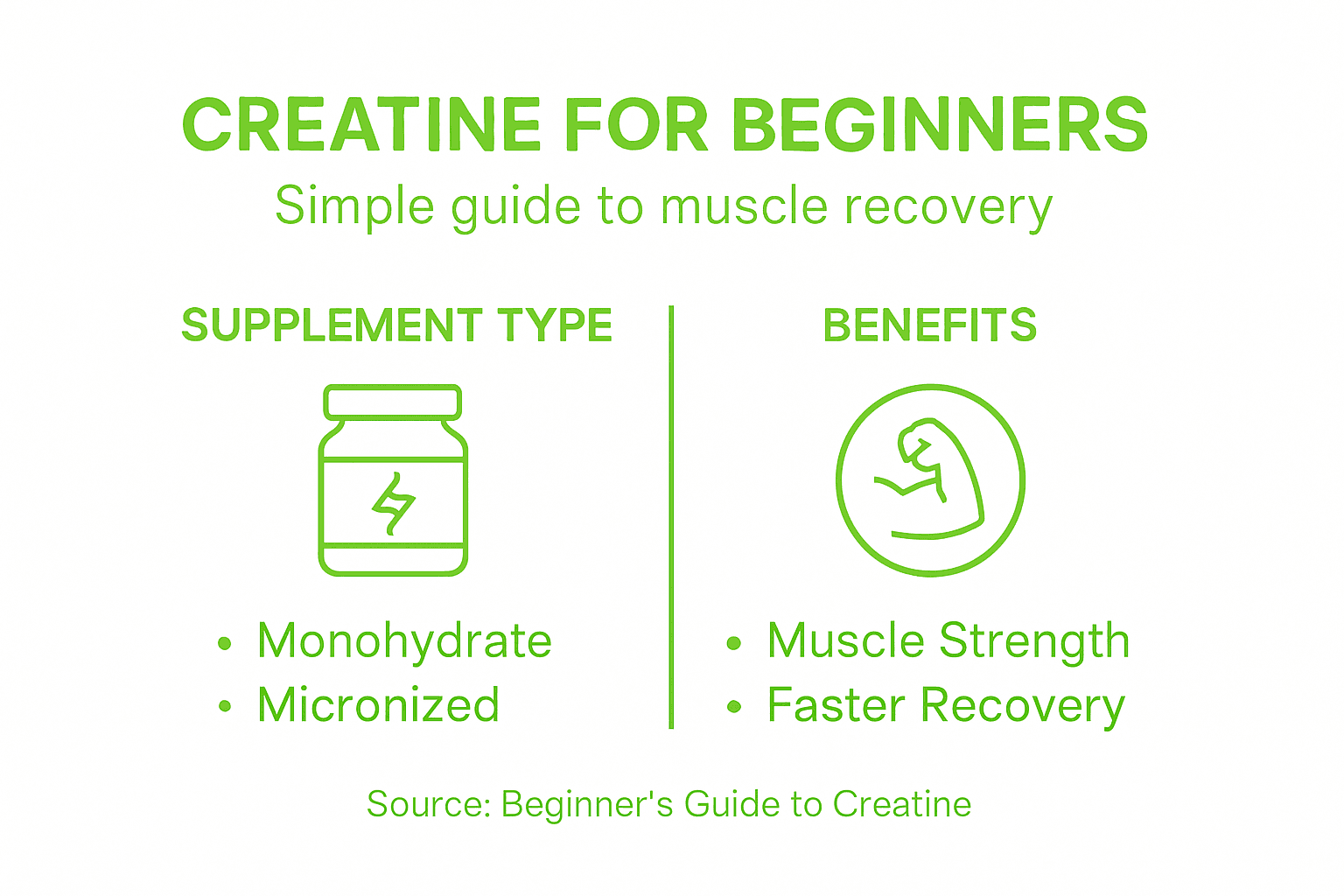
To help you compare creatine types and choose the best fit for your needs, see the table below:
| Creatine Type | Absorption Rate | Ideal For | Cost Effectiveness |
|---|---|---|---|
| Creatine Monohydrate | Moderate, well-researched | Most users, beginners | Most affordable |
| Creatine Hydrochloride | Higher, gentle on stomach | Individuals with digestive issues | Higher price per dose |
| Micronised Creatine | Enhanced mixability | Those mixing with cold liquids | Slightly more expensive |
| Buffered Creatine | May reduce side effects | Sensitive users | Premium cost |
Pro tip: Always purchase creatine supplements from reputable sources and check for third-party testing to ensure product quality and purity.
Step 2: Assess Your Starting Point and Fitness Goals
Understanding your current fitness level and specific goals is crucial before beginning a creatine supplementation programme. This assessment will help you personalise your approach and maximise potential benefits.
Individual responses to creatine vary significantly depending on factors like body composition, training intensity, and current muscle creatine stores. To effectively evaluate your starting point, consider these key elements:
- Body Composition: Current muscle mass and weight
- Training Experience: Intensity and type of current exercise routine
- Fitness Objectives: Specific goals like muscle growth or strength improvement
- Dietary Habits: Current protein intake and nutritional profile
Your unique physiological characteristics will determine how effectively you respond to creatine supplementation.
For most individuals, the primary goals typically involve one of three primary areas:
- Muscle Mass Development: Targeting hypertrophy and strength gains
- Performance Enhancement: Improving high-intensity exercise capacity
- Recovery Acceleration: Reducing muscle fatigue and supporting faster regeneration
Pro tip: Consider consulting a fitness professional or nutritionist to conduct a comprehensive baseline assessment before starting your creatine supplementation journey.
Step 3: Plan Your Creatine Loading and Daily Dosage
Determining the right creatine dosage is crucial for maximising your supplementation benefits and ensuring optimal muscle recovery. Your loading and maintenance strategy will depend on your individual fitness goals and body composition.
The UK Nutrition and Health Claims Committee recommends a structured approach to creatine supplementation that involves two primary phases:
- Loading Phase: Typically 20 grams per day, divided into 4-5 smaller doses
- Maintenance Phase: 3-5 grams daily after initial loading period
- Alternative Approach: Steady 3-5 grams daily without loading phase
Consistency in your supplementation strategy is more important than the precise loading method.
Consider these factors when planning your dosage:
Here is a quick guide to structuring your creatine intake phases for optimal results:
| Phase | Daily Amount | Duration | Purpose |
|---|---|---|---|
| Loading Phase | 20 g (split doses) | 5–7 days | Rapid muscle saturation |
| Maintenance Phase | 3–5 g | Until paused | Maintain muscle levels |
| Gradual Approach | 3–5 g | Continuous | Slow saturation, less risk |
- Body Weight: Adjust dosage proportionally to your weight
- Training Intensity: Higher intensity may require slightly increased intake
- Personal Tolerance: Monitor how your body responds
- Hydration Levels: Increase water intake during supplementation
Pro tip: Start with the lowest recommended dose and gradually increase to assess your individual tolerance and minimise potential digestive discomfort.

Step 4: Incorporate Creatine Into Your Daily Routine
Successfully integrating creatine into your daily nutrition plan requires a strategic and consistent approach. The goal is to make supplementation feel natural and effortless within your existing lifestyle.
Creatine timing can be remarkably flexible across different moments of your day, allowing you to personalise your intake around your schedule. Consider these practical integration strategies:
- Morning Routine: Mix with breakfast smoothie
- Pre-Workout: Consume 30 minutes before training
- Post-Workout: Combine with protein shake
- Evening Option: Take with dinner or before bedtime
Consistency matters more than the precise timing of your creatine intake.
Effective integration methods include:
- Liquid Mixing: Dissolve in water, juice, or protein shake
- Meal Pairing: Take with food to improve absorption
- Routine Anchoring: Link intake to an existing daily habit
- Tracking: Use a supplement log or smartphone reminder
Pro tip: Create a visible reminder in your kitchen or gym bag to ensure you never miss your daily creatine dose.
Step 5: Monitor Your Progress and Adjust as Needed
Tracking your creatine supplementation journey requires careful observation and willingness to make strategic adjustments. Your body’s response to creatine can vary, making personalised monitoring crucial for optimal results.
Setting fitness goals for maximum results involves understanding how your body responds to creatine supplementation. Here are key metrics and methods to assess your progress:
- Strength Levels: Track weightlifting performance
- Body Composition: Measure muscle mass and body fat percentage
- Recovery Speed: Note muscle soreness and workout recovery time
- Energy Levels: Monitor overall workout and daily energy
Individual responses to supplementation can differ significantly, so personalised tracking is essential.
Effective progress monitoring strategies include:
- Workout Logging: Record strength gains and performance metrics
- Body Measurements: Take monthly body composition assessments
- Performance Tracking: Note improvements in workout intensity
- Subjective Evaluation: Journal energy levels and recovery experiences
Pro tip: Use a dedicated fitness tracking app or notebook to consistently document your supplementation journey and physical changes.
Maximise Your Muscle Recovery with the Right Creatine Support
Struggling to find a creatine supplement that truly fits your recovery goals and workout routine? This guide highlights key challenges like choosing the right creatine type, planning your ideal dosage, and tracking progress to overcome muscle fatigue and boost performance effectively. If you want to experience the benefits of scientifically backed creatine monohydrate or try gentler alternatives for digestive comfort, you need trusted products designed for your unique needs.
At MyGymSupplements.shop, discover a carefully curated range of creatine options tailored to help you build muscle, enhance strength, and speed up recovery. Explore our performance recovery aids to complement your creatine regimen and support faster regeneration. Don’t wait for results—take control of your fitness journey today and shop with confidence from our reliable collection. Start your transformation now by visiting MyGymSupplements.shop and select the perfect creatine supplement to power your progress.
Frequently Asked Questions
What is the best type of creatine supplement for beginners?
Creatine Monohydrate is considered the best option for beginners due to its extensive research supporting its benefits for muscle recovery and strength. Start with this form to maximise results while keeping costs low.
How should I start taking creatine for better muscle recovery?
Begin with a loading phase of 20 grams per day, divided into 4-5 smaller doses for 5-7 days, followed by a maintenance phase of 3-5 grams daily. This structured approach helps saturate your muscles with creatine quickly and efficiently.
How can I integrate creatine into my daily routine?
You can take creatine with water, juice, or even mix it into your post-workout protein shake. Choose a time that best fits your schedule, whether it’s before a workout or with a meal, to ensure consistency in your supplementation.
What fitness goals can I achieve by using creatine?
Creatine supplementation can help with muscle mass development, performance enhancement during high-intensity exercises, and recovery acceleration. Define your specific goal, such as increasing muscle growth or improving workout performance, to tailor your approach.
How do I monitor my progress while using creatine?
Track your strength levels through performance metrics, such as weights lifted, and take monthly body composition measurements for changes in muscle mass. Regularly evaluate your energy levels and recovery speed to adjust your creatine intake as needed.
Are there any side effects I should be aware of when taking creatine?
Some individuals may experience digestive discomfort or bloating with certain creatine types. Start with the lowest recommended dose to assess your body’s tolerance and gradually increase as necessary.
Recommended
- Step-by-Step Guide to Creatine Usage for Athletes – MyGymSupplements
- What Is Muscle Recovery? A Complete Overview – MyGymSupplements
- 7 Key Types of Creatine Explained for Fitness Success – MyGymSupplements
- Unleash Strength with Optimum Nutrition Micronised Creatine – MyGymSupplements
- Basketball Training: Building Skills and Team Success – Hoop Mentality

0 comments